
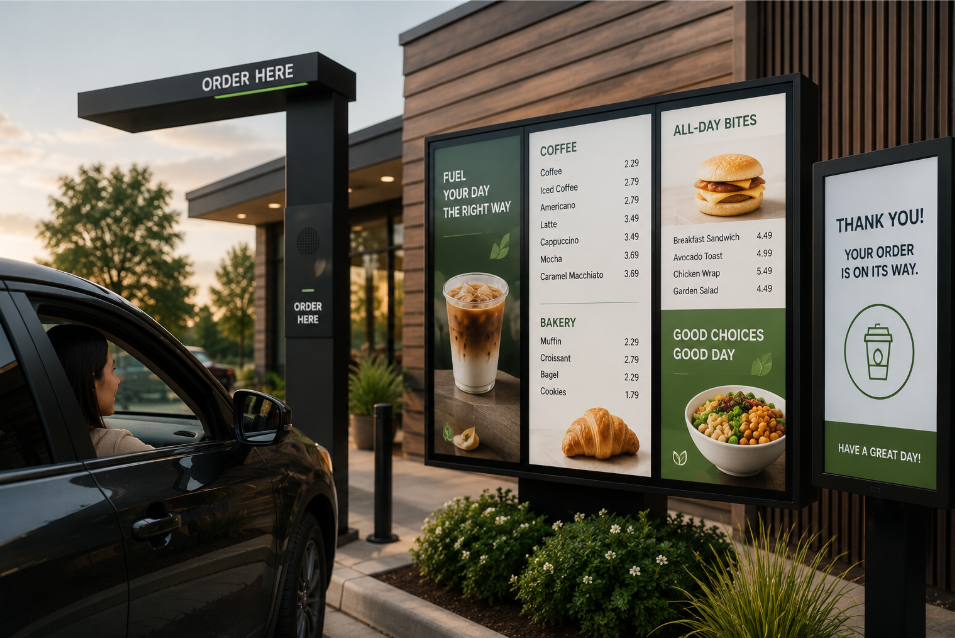
A digital signage system is only as effective as the content it displays.
You can invest in the right screens, software, and technology, but if the content isn’t clear, relevant, or designed for the environment, it can quickly become something viewers simply tune out.
A strong content strategy starts by understanding three things: your audience, your purpose, and your environment. What do viewers need to know? What action do you want them to take? And how quickly will they be able to absorb the message?
Design for the Screen
Digital signage content should be easy to understand at a glance. That means considering more than just what looks good on a computer.
Think about:
- Screen size and orientation
- Viewing distance
- Font size and readability
- Image and video quality
- Amount of text on screen
- How long each message appears
- Brand consistency
The goal is to communicate clearly without asking too much of the viewer.
Keep Content Relevant
As we’ve shared in our previous digital signage content strategy guide, keeping content fresh and relevant is essential to maintaining the value of your displays.
Content should evolve alongside your organization—whether you’re sharing announcements, promotions, wayfinding, events, live information, educational messaging, or going through a re-brand!
Start with the Right Specifications
Great content also needs to be created in the right format from the beginning, including cc for videos.
Our Digital Signage Content Spec Sheet provides a practical reference for preparing content for your displays, helping your team understand the technical and creative requirements before content goes live.
With the right strategy and specifications in place, your screens can become more than displays. They become an effective communication tool that stays useful, relevant, and engaging.