
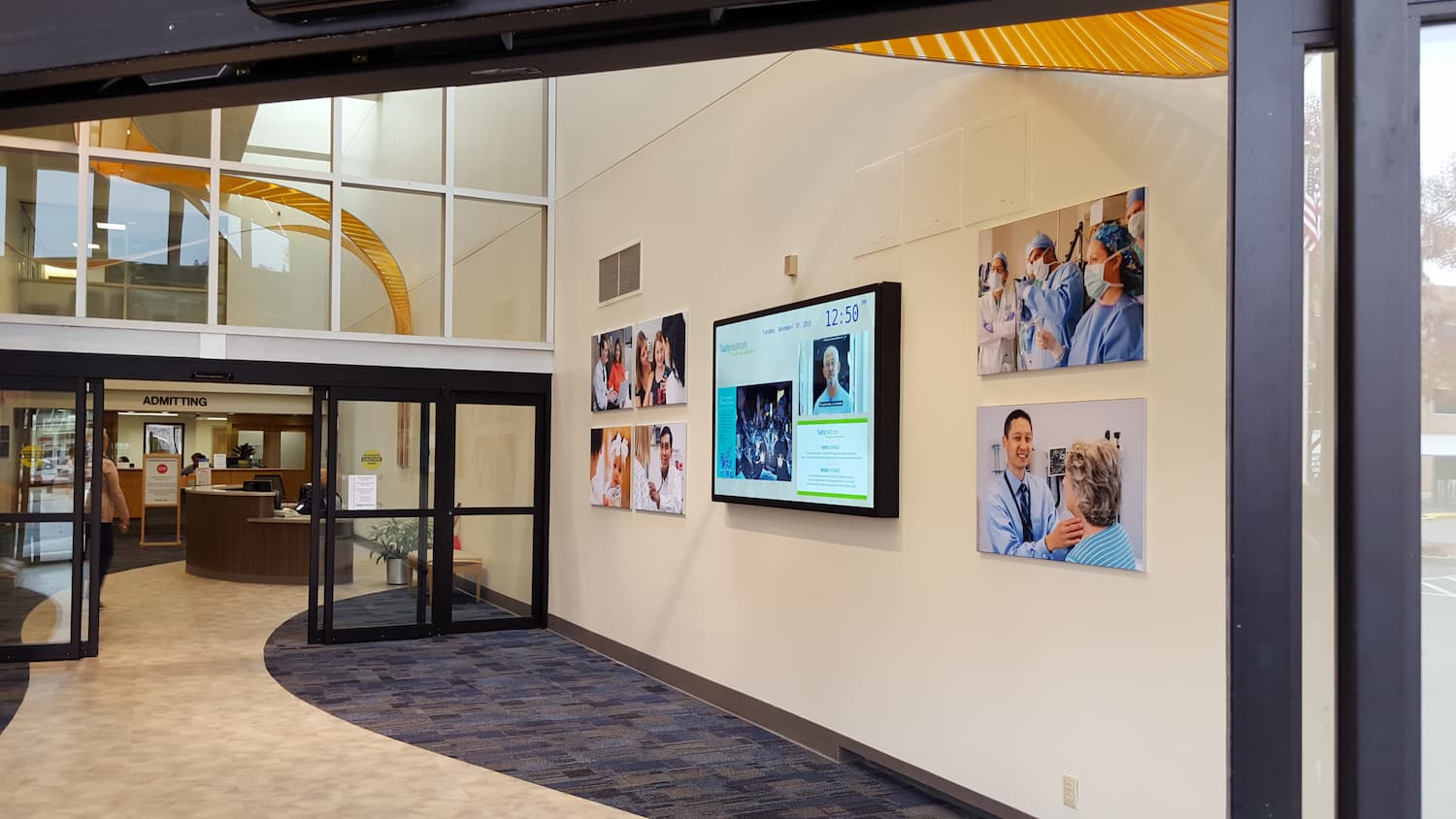
Hospitals operate in high-pressure environments where clarity, speed, and trust directly affect outcomes. Digital signage supports these priorities by improving how information is delivered to patients, visitors, clinicians, and administrative teams.
Hospitals see improved patient experience scores when information is easy to find and understand. Clear wayfinding, wait time communication, and on-screen guidance help reduce anxiety and perceived wait times. When patients feel informed and supported, satisfaction and engagement increase.
Operational efficiency also improves. Digital signage reduces the volume of routine questions directed to frontline staff, allowing teams to focus on care delivery. Real-time updates to room availability, clinic schedules, and internal notices help departments stay aligned and reduce delays across patient flow.
For clinical and administrative teams, digital signage strengthens internal communication. Doctors and staff receive consistent updates on protocols, alerts, and operational changes across shared spaces. This improves awareness, supports compliance, and reduces reliance on fragmented communication channels.
Hospitals gain control, consistency, and speed in messaging. Emergency alerts, policy updates, and public health information can be deployed instantly across the facility. Content stays accurate and current without recurring printing costs or manual updates.
The result is a calmer, more organized hospital environment. Patients move through facilities with confidence. Staff operate more efficiently. Administrators maintain real-time control over critical communications. Digital signage becomes a practical tool that supports measurable improvements in experience, efficiency, and trust.